
In this article
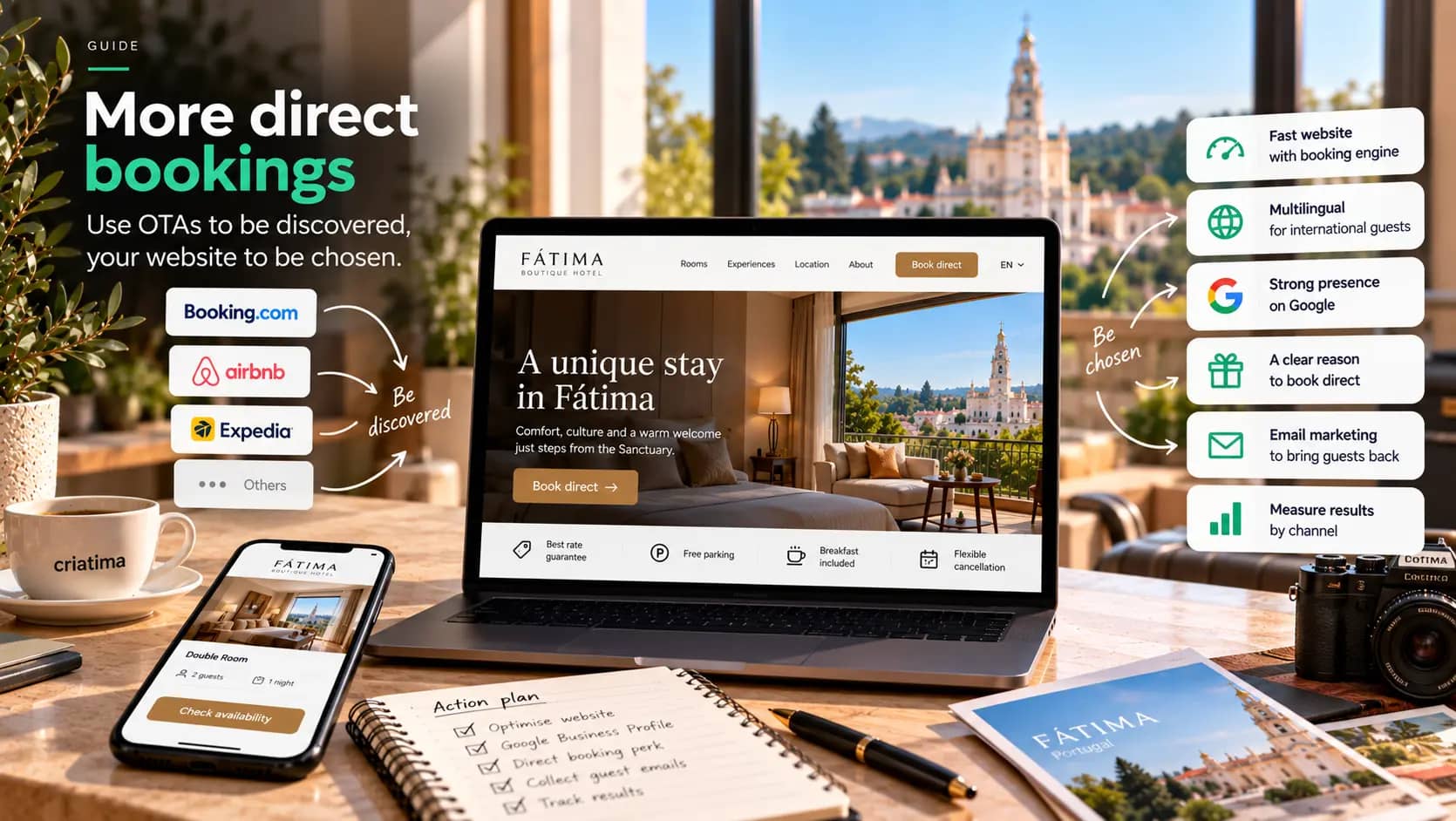
Growing direct bookings doesn’t mean leaving Booking.com or Airbnb: it means using the platforms to be discovered and your own website to be chosen. In practice, you need a fast website with a booking engine, a strong presence on Google, a clear reason to book direct and a process for bringing back guests who have already stayed with you.
For a hotel or holiday rental in Fátima, Ourém, Tomar or any destination in central Portugal, every direct booking is a booking with no commission, and with the guest’s details on your side. This guide explains what to do, and in what order.
Why direct bookings are worth investing in
Online travel agencies (OTAs such as Booking.com, Airbnb or Expedia) have a reach that no small property can match. They are often the guest’s first contact with you. The problem isn’t being on them; it’s depending on them.
When almost all your bookings come through the platforms:
- You pay commission on every night sold, which squeezes your margin in precisely the months when you work hardest.
- The guest’s contact details stay with the platform, and it’s hard to invite them back directly.
- The rules change without warning: ranking algorithms, visibility programmes, cancellation policies.
- You compete side by side with all your neighbours, in the same list, often on price alone.
The realistic goal is to balance your channels: keep the platforms to attract new guests, and make sure a growing share of bookings, especially repeat ones, happens on your own website.
1. A website that converts, mobile first
The website is the foundation of everything. If it’s slow, out of date or hard to use on a phone, the guest goes back to the platform to book, even if they found you on Google.
The essentials:
- An integrated booking engine, with live availability and rates, connected to your PMS or channel manager to avoid overbooking.
- Booking in just a few steps, without forcing guests to create an account.
- Real, recent photos of each room type, the common areas and the surroundings.
- Visible practical information: location, walking distance to the Sanctuary or the historic centre, parking, check-in times, cancellation policy.
- Your holiday rental registration number (the alojamento local number) on display, as Portuguese law requires when advertising this type of accommodation.
- Speed: a website that’s slow to load loses bookings before the guest even sees the first room.
Our web design service starts from exactly this point: a fast, mobile-first website with the booking engine at the heart of the experience.
2. Speak your guests’ language
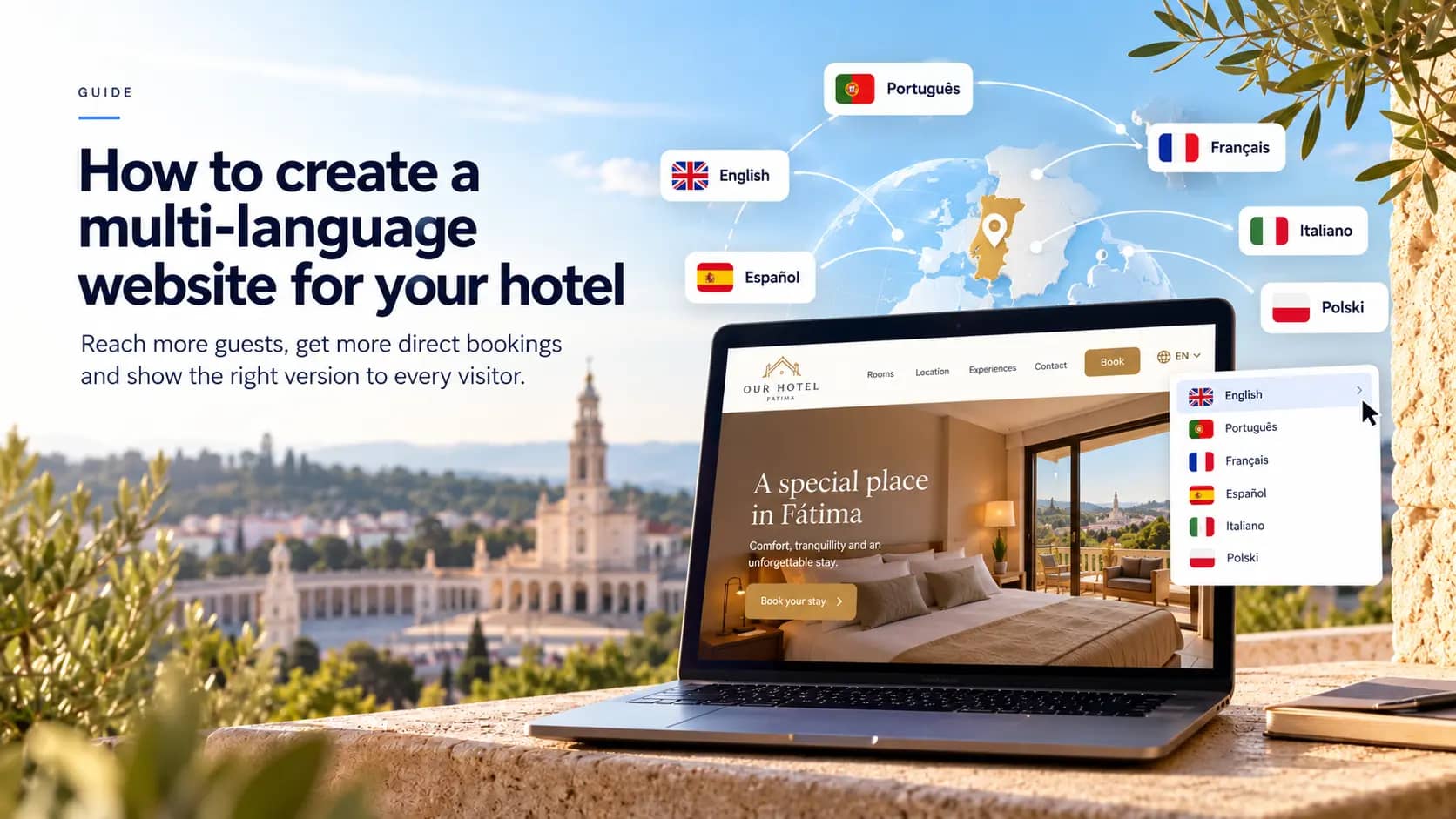
Fátima welcomes visitors from many countries, and so do many destinations in central Portugal. A guest who searches in Spanish, French, English or Polish and lands on a website that’s only in Portuguese goes back to the platform, which speaks their language.
A machine-translation button isn’t enough. Each language needs adapted copy, its own URLs and hreflang markup so that Google shows the right version. We explain it all in our guide on how to build a multilingual website for hotels and tourism.
3. Show up on Google when guests search
Many bookings start with a search such as “hotel near the Sanctuary of Fátima” or “accommodation in Tomar with parking”. To appear at those moments:
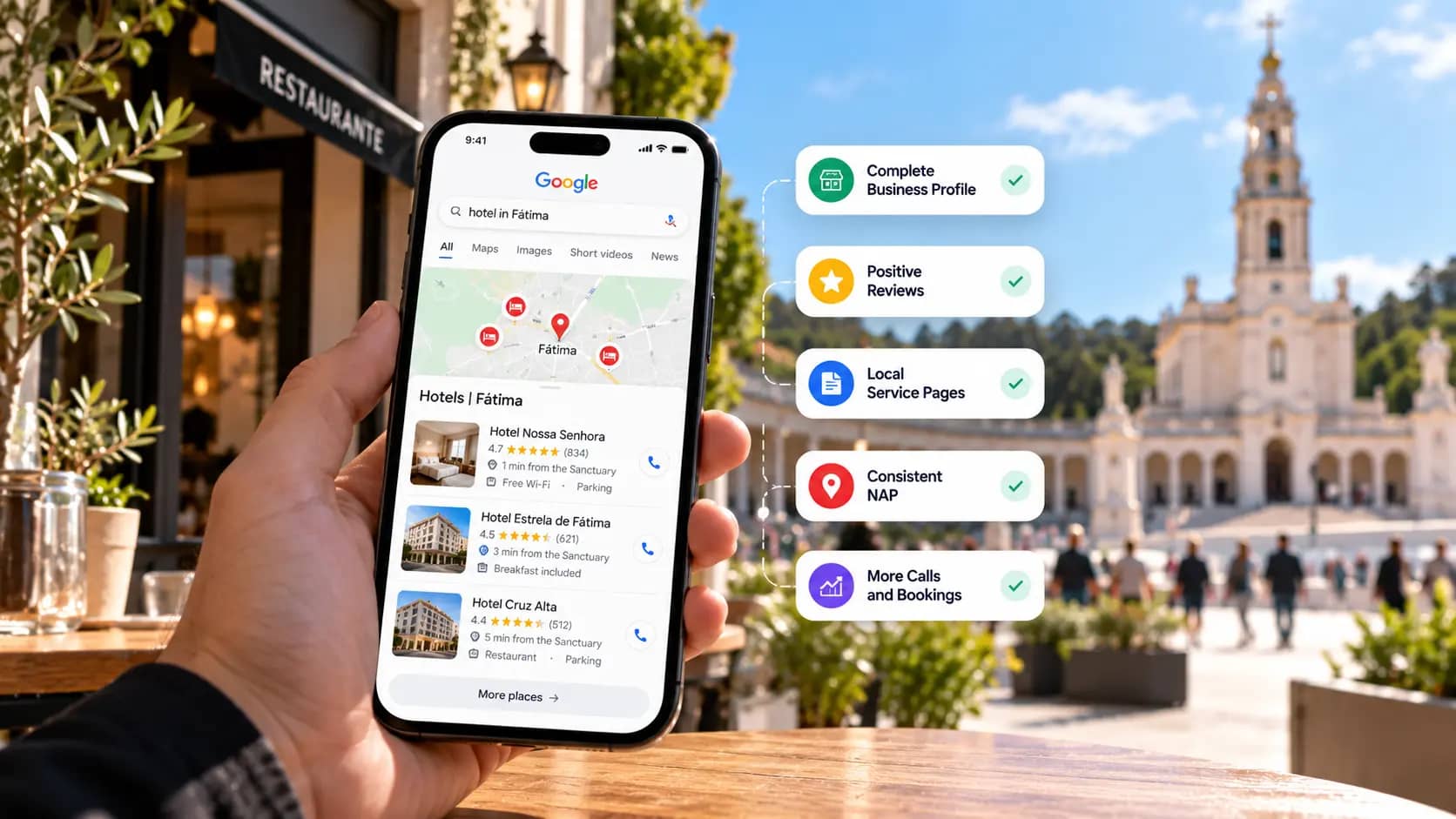
- A complete Google Business Profile, with photos, the right categories, a link to your website and, if your booking engine allows it, a direct booking link.
- Reviews answered, all of them, with care.
- A page on your website for each intent: family rooms, groups and pilgrimages, one-night stays, accessibility.
- Free booking links and rates on Google Hotels, if your booking engine or channel manager supports them.
Our guide to local SEO in Fátima covers each of these points in detail.
4. Give guests a reason to book direct
If the price and conditions are the same everywhere, guests book wherever they already have an account. Give them a reason:
- Breakfast included, free parking or early check-in for direct bookings.
- More flexible cancellation terms.
- A small welcome gift or a discount on their second stay.
- Direct contact, by phone or message, before arrival.
On price: the parity clauses that stopped properties from offering lower rates on their own channels have been restricted in the European Union, including by the Digital Markets Act, which covers Booking.com. Before setting your pricing policy, check the terms of your contract with each platform.
5. Build loyalty with past guests
A guest who has already stayed with you and enjoyed it is the most likely candidate for a direct booking. But you can only contact them if you have their email address and their consent to do so.
- Collect the email address at check-in or with the direct booking, with clear consent to receive communications.
- Send a thank-you message after the stay, with a request for a review.
- Remind them ahead of the dates that matter: for visitors to Fátima, May and October, the major pilgrimages or the anniversary of a previous visit.
- Offer exclusive perks to guests who come back and book direct.
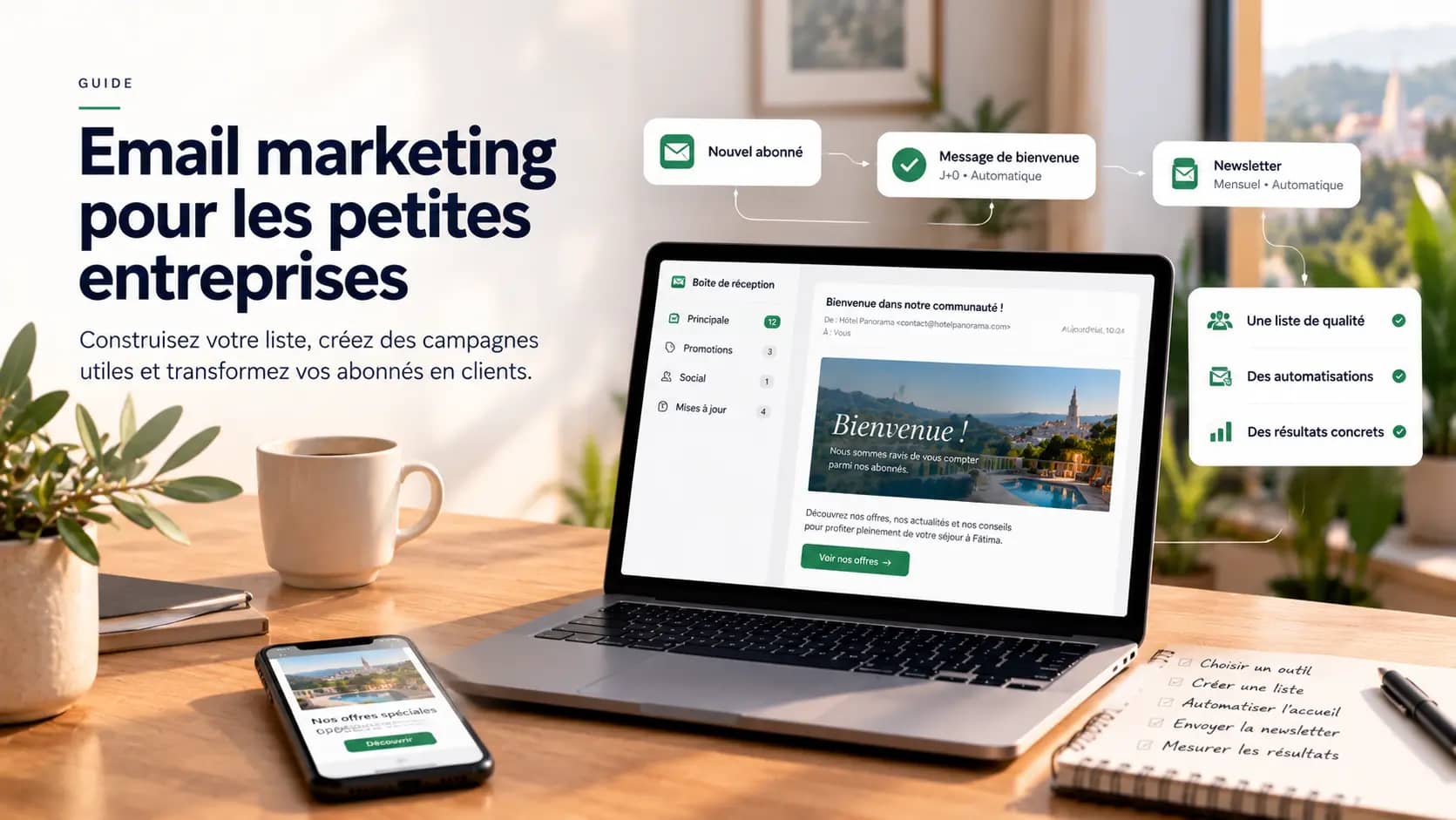
A simple email marketing programme does this work automatically. We explain how to get started in our guide to email marketing for small businesses.
6. Measure bookings by channel
Without numbers, you can’t tell whether it’s working. Track, month by month:
- Number of bookings and revenue by channel (website, phone, each OTA).
- Commission paid to each platform.
- Website conversion rate: visits that end in a booking.
- Where website visits come from: Google, Business Profile, social media, email.
Always compare with the same month of the previous year. In a destination as seasonal as Fátima, comparing May with February tells you nothing.
Where to start
If you’re short on time, start with what has the most impact:
- Make sure your website works well on mobile and the booking engine is clearly visible.
- Complete your Google Business Profile and link it to your website.
- Define a clear perk for guests who book direct and promote it on your website.
- Start collecting guest email addresses, with consent.
See our work for hotels and holiday rentals or get in touch so we can review your booking channels.
Frequently asked questions
Should I leave Booking.com to get more direct bookings?
Usually not. The platforms bring you guests who wouldn’t otherwise find you, especially from foreign markets. The aim is to reduce dependence, not to drop the channel. Use the OTAs to be discovered, and your website, Google and email to make the next bookings direct.
Do I need a booking engine on my website?
Yes, if you’re serious about direct bookings. An enquiry form makes guests wait for a reply, and many give up. A booking engine integrated with your PMS or channel manager shows real availability, confirms instantly and avoids selling the same room twice.
Can I offer a lower price on my own website?
In many cases you can, and European rules have restricted the parity clauses imposed by the platforms. Even so, check the terms of your contract with each OTA. A non-monetary perk, such as breakfast or flexible cancellation, is often as effective as a discount.
How long does it take to grow direct bookings?
Improvements to your website and Business Profile can take effect within a few weeks. SEO and email loyalty are built over months and several seasons. The most important thing is to measure by channel from the start, so you can see what’s working and where to invest next.

Suzi Rodrigues
Business Manager